
Sat 3.10.2026 // 19.00
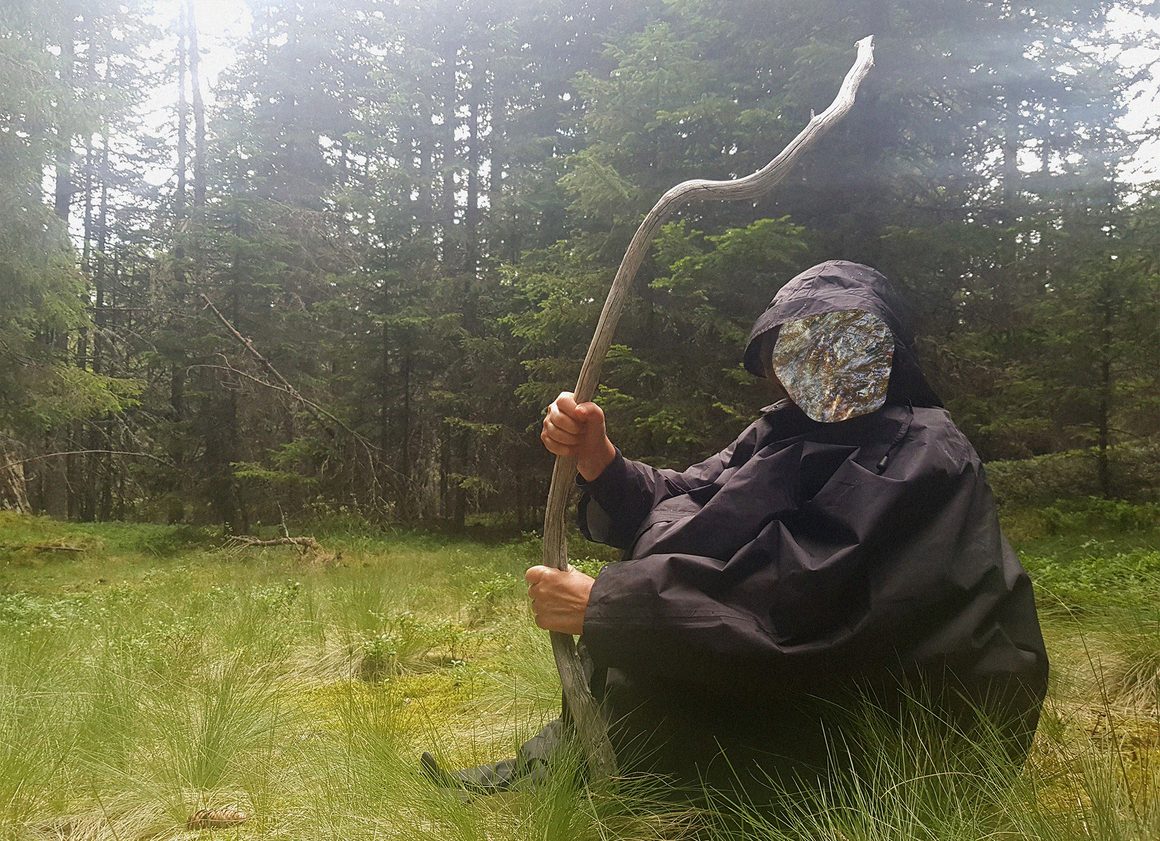
Photo: Kilian Jörg, edited by Tina Bauer
Sat 3.10.2026 // 19.00
Open Lab/Artist Lecture
Bräuhausgasse 40, 1050 Vienna // free participation
With: Lisa Hinterreithner (AT), Michael Hirsch (DE), Kilian Jörg (AT) and Anita Kaya (AT)
Guest contribution: Esther Strauß (AT)
Realized by Im_flieger as part of Stoffwechsel – Ecologies of Collaboration. www.stffwchsl.net
Did you know that the word “Alps” comes from Iraq? And that ever since the first settlers from Mesopotamia, the Alps have been cultivated as a cultural landscape that has been slowly decaying since the start of industrialization?
As part of the artistic research lab Stoffwechsel – Ecologies of Collaboration, we have been exploring new and old materialisms and ecosophies for a decade now, ones that establish different relationships with the Earth, relationships that are dirtier and more loving: soiled love. We are currently focusing on the Alpine region, including the challenging questions surrounding traditional ways of life.
Buried in the Damp Northern Alpine Rim lies a millennia-old cultural practice that has made the Alps, as a cultural region, what they (still) are today: a highly biodiverse area with human landscape cultivation practices designed for cohabitation and sustainability. Just as indigenous peoples co-created the Amazon rainforest as a complex habitat, the Alpine region can also be understood as the result of highly complex and long-term human eco-intelligence.
Yet the Alps are also a machine for leisure tourism and the fetishization of high-performance agriculture, as well as a symbol of reactionary populism. How can this toxic mix be understood, and how can we – beyond simplified, idealized projections – think of the historical ways of life in the Alpine region as a source of inspiration for future forms of co-habitation? As part of SOILED LOVE: The Damp Northern Alpine Rim, we explored cow dung and cloud formations, watercourses and alpine farming – we searched for the local fairy tales and explored our physicality in relation to the towering rock massifs. With this Open Lab, we aim to share our experiences and open them up for discussion. We have also invited the artist Esther Strauß, who has been intensively engaged with the Alps from an artistic perspective for many years. She will present her current project, Denkmal für Schnee, which explores the loss of glaciers and the grieving process that accompanies it.
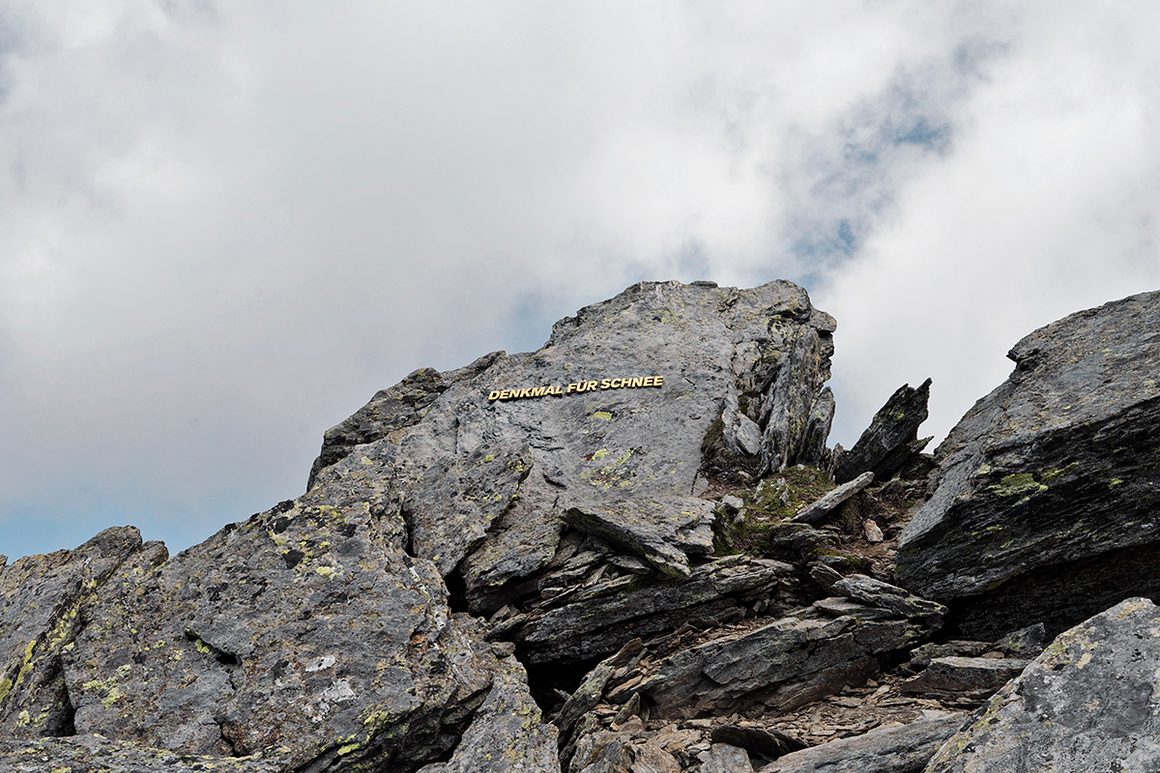
Photo: Esther Strauß
“The day may come when the very last snow falls in the Alps. A monument is to remind us of this loss even before it has occurred. On a nameless peak, situated between two summits in the primeval rock of the Tux Alps, a delicate brass inscription, 80 centimetres wide, will be affixed at an altitude of almost 2,700 metres. The three little words Denkmal für Schnee (Monument for snow) transform the mountain into a pedestal, on whose highest point – at some point, on a day that can be sensed but not predicted – the last snow to fall on this peak will melt. What does its disappearance mean to us?” (Esther Strauß)
Anita Kaya (AT) born 1961, is a freelance choreographer, performer and curator living in Vienna. Under the label OYA-Produktion (1988-2005) she created dance productions, site-specific performances, performative installations and dance videos that were presented internationally. In 2000, she initiated the artists for artists initiative Im_flieger – research laboratory for dance, performance and transmedia art (Concept funding from the City of Vienna 2022-25). In artistic direction and in collaboration with numerous artists and theoreticians, she develops new concepts and structures of artistic cooperation and mentoring programmes: e. g. the European residency programme for young choreographers TERRAINS FERTILES 05 (Innovation Prize 2005 of IG-Kultur Vienna). She is engaged with the body as a reservoir of individual and collective memory, and its potential for communication with the environment, the human and more than human: e. g. Translocations / One-to-One Performance located at the intersection of history/trauma, archiving, installation and performance. 2023 she cooperates with Theatercombinat/ Claudia Bosse as performer/ choreographer in the production Bones & Stones. In 2019/20 she completed the university course “Curating in the Scenic Arts” at the University of Salzburg and Munich. She is co-editor and author of the publication VISCERAL FICTION – Im_flieger schreibt Geschichte/s – 20 Jahre Künstler:innen für Künstler:innen. 2021, monocrom. www.imflieger.net, www.stffwchsl.net
Esther Strauß (AT) (born 1986) is a performance and language artist. What her works hide is just as important as what they reveal. She has received numerous awards, most recently the Paul Flora Prize 2022 and the BMKOES State Scholarship 2021. www.estherstrauss.info
Kilian Jörg (AT) works both artistically and philosophically on the topic of ecological catastrophe and how its transformative forces can best be imagined and deployed. Previous publications have been on club culture, the political backlash from an ecological perspective, cultivating distance in catastrophic times and a speculative religion of waste. His current research topics are the car as a metaphor for our toxic entanglements with modern lifestyles (released in book form as “Das Auto und die ökologische Katastrophe” in September 2024), the socio-psychological effects of living with ecocide and radical activist strategies of reclaiming land like the ZAD in France. He is working with the Futurama.Lab at the Academy of Fine Arts Vienna and is affiliated to the SFB Affective Societies at the FU Berlin. www.kilianj.org & www.kilianjoerg.blogspot.com
Lisa Hinterreithner (AT) Die Künstlerin und Performerin Lisa Hinterreithner verschränkt in ihren Arbeiten Körper und Materialien. Dabei sucht sie nach experimentellen Performance Formaten, die Fragen zu Repräsentation und Teilhabe thematisieren. So entstehen gemeinsame Prozesse und Räume, in denen sich Publikum, Performer*innen und Dinge verbinden. Sie hat u.a. mit Julius Deutschbauer, Jack Hauser, Rotraud Kern, Elise Mory, Laura Navndrup Black, Lilo Nein, Martina Ruhsam, Linda Samaraweerová gearbeitet. www.lisahinterreithner.at
Michael Hirsch (DE) is a philosopher, political scientist and art theorist. He teaches political theory and the history of ideas at the University of Siegen and lives as a freelance author in Munich. He is a regular participant in the workshops and research labs of “Stoffwechsel. Ecologies of Cooperation” as part of Im_flieger. Recent publications: Richtig falsch. Es gibt kein richtiges Leben im falschen (2019); Die Überwindung der Arbeitsgesellschaft. Eine politische Philosophie der Arbeit (2016); Logik der Unterscheidung. 10 Thesen zu Kunst und Politik (2015). www.michael-hirsch-archiv.de